Results 1 to 15 of 15

Thread: Cannabis used as medicine in late 1800's to early 1900's

  1. #1
    Moderator HappyMonday's Avatar
    Join Date
    Sep 2012
    Location
    United Kingdom
    Posts
    463
    Thanks
    635
    Thanked 115 Times in 72 Posts

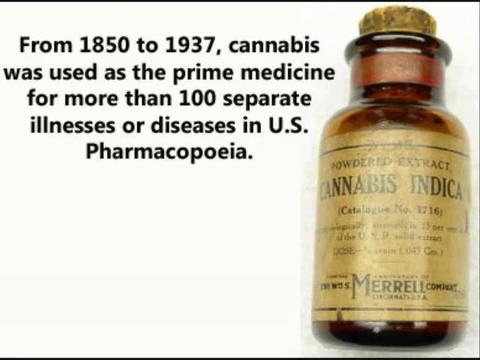
    Cannabis used as medicine in late 1800's to early 1900's

    Name:  image.jpg
Views: 318
Size:  39.9 KB

    'Cannabis cures cancer' claims are getting traction on Facebook at the moment.

    I thought this supposedly related claim is a prime example of a factoid that's not really relevant being used in support of a more specific claim.

    Here's an example of the page linked -

    http://www.knowledgeoftoday.org/2012...vent-cure.html
    Last edited by HappyMonday; January 7th, 2013 at 05:38 AM.

  2. The Following User Says Thank You to HappyMonday For This Useful Post:

    Dan Wilson (January 7th, 2013)

  3. #2
    Member Dan Wilson's Avatar
    Join Date
    Nov 2012
    Posts
    137
    Thanks
    28
    Thanked 50 Times in 41 Posts
    Things like this are always frustrating. Plenty of miracle cancer cures circulate around and most if not all of them are very misleading. I mean, certain cancers are very curable with medicine and surgery especially in early stages while very little can be done about others. Of course things like diet would be important in preventing or treating cancer but that alone is not a safe bet. Patients are better off exploiting medicine and treatments that have been put through clinical trials and such. Alternatives aren't necessarily bad but when people misunderstand and lose trust in modern medicine they end up sinking all of their money into treatments that have not been demonstrated scientifically to have any benefit. I noticed on that page that Bruce Lipton is listed as one of their experts and I wrote a forum about him a while back, there is a lot wrong with what he says.
    As for pot use, there is some evidence that it causes psychosis:
    http://www.popsci.com/science/articl...osis-cause-pot
    There are conflicting opinions on its treatment for certain things but I'm not familiar with the data on that. I don't see, however, how THC can have any positive effects on cancer. It could make you feel really good and feel "better" but it's not really helping to kill or get rid of any malignant cells.

  4. #3
    Member solrey's Avatar
    Join Date
    Dec 2011
    Posts
    427
    Thanks
    76
    Thanked 186 Times in 107 Posts
    Recent studies indicate that Cannabinoids can be effective in treating cancer.

    From the National Cancer Institute on Cannabis and Cannabinoids:

    Cannabinoids may cause antitumor effects by various mechanisms, including induction of cell death, inhibition of cell growth, and inhibition of tumor angiogenesis invasion and metastasis. One review summarizes the molecular mechanisms of action of cannabinoids as antitumor agents. Cannabinoids appear to kill tumor cells but do not affect their nontransformed counterparts and may even protect them from cell death. These compounds have been shown to induce apoptosis in glioma cells in culture and induce regression of glioma tumors in mice and rats. Cannabinoids protect normal glial cells of astroglial and oligodendroglial lineages from apoptosis mediated by the CB1 receptor.
    [..]
    An in vitro study of the effect of CBD on programmed cell death in breast cancer cell lines found that CBD induced programmed cell death, independent of the CB1, CB2, or vanilloid receptors. CBD inhibited the survival of both estrogen receptor–positive and estrogen receptor–negative breast cancer cell lines, inducing apoptosis in a concentration-dependent manner while having little effect on nontumorigenic, mammary cells.
    Reference papers 3 - 27 are all studies relating to cannabinoids effects on cancer cells, not to mention the appetite stimulating and analgesic properties of cannabis.

    I think it's dangerously mis-leading to declare that "Cannabis Cures Cancer", however there is strong evidence indicating that it can be effective in treating certain types of cancer and can also be used to alleviate the side effects of standard chemotherapy.

    Cannabis actually is one of the most versatile medicinal plants there is which is why it had been widely used as such for centuries (way before the 1800's) until the relatively recent criminalization. Modern scientific studies have discovered the mechanisms and proven the efficacy of several medicinal uses for cannabis.

    cheers
    Last edited by solrey; January 7th, 2013 at 08:50 AM.

  5. #4
    Member Dan Wilson's Avatar
    Join Date
    Nov 2012
    Posts
    137
    Thanks
    28
    Thanked 50 Times in 41 Posts
    Quote Originally Posted by solrey View Post
    Recent studies indicate that Cannabinoids can be effective in treating cancer.

    From the National Cancer Institute on Cannabis and Cannabinoids:


    Reference papers 3 - 27 are all studies relating to cannabinoids effects on cancer cells, not to mention the appetite stimulating and analgesic properties of cannabis.

    I think it's dangerously mis-leading to declare that "Cannabis Cures Cancer", however there is strong evidence indicating that it can be effective in treating certain types of cancer and can also be used to alleviate the side effects of standard chemotherapy.

    Cannabis actually is one of the most versatile medicinal plants there is which is why it had been widely used as such for centuries (way before the 1800's) until the relatively recent criminalization. Modern scientific studies have discovered the mechanisms and proven the efficacy of several medicinal uses for cannabis.

    cheers
    Things like that is what I meant by differing opinions. There does seem to be some data that cannabis can treat certain medical conditions but I wouldn't say it is the best choice. From the first reference on your page:

    However, cannabinoid-derived drugs on the market today lack specificity and produce many unpleasant side effects, thus limiting therapeutic usefulness.
    The risk of long-term mental effects would lead me to say that other medicines would be the better choice, or perhaps even a synthetic derivative of THC that is less likely to cause side-effects. Thats just an idea, though.

    http://www.sciencemag.org/content/31...9-2488da14eb95

    This advice prompted criticism from several researchers who argued that the panel had brushed aside recent findings indicating that cannabis use can cause mental illness. For example, psychiatrist Robin Murray of the Institute of Psychiatry at King's College London (KCL) says, “My beef with the government has not been with classification but with the message that cannabis does not induce psychosis.” Psychiatric researcher Louise Arseneault of KCL says observational studies consistently show that heavy use of cannabis, particularly in adolescence, can cause lasting mental health problems. She is part of a group led by Avshalom Caspi at KCL pursuing evidence that individuals with a variant of the COMT gene, which is involved in regulating neurotransmitters, have an increased risk for cannabis-induced psychosis.

  6. #5
    Senior Member Grieves's Avatar
    Join Date
    Dec 2012
    Location
    Canada
    Posts
    617
    Thanks
    32
    Thanked 123 Times in 94 Posts
    It could make you feel really good and feel "better" but it's not really helping to kill or get rid of any malignant cells.
    Is feeling really good not curative in and of itself? For many cancer patients one of the most difficult aspects of treatment is keeping a positive attitude/avoiding depression. That there's studies suggesting cannabis has curative properties where some types of cancer are involved is good news, sure... but its no miracle cure. It's just silly that people who are sometimes terminally ill often have to become 'criminals' if they want to get high.
    As for 'cannabis causing psychosis', I'm aware of some studies suggesting chronic use can lead to mental illness in adolescents, but that's also suggested of chronic drinkers/eaters/loners/sleepers/tv-watchers/porn-viewers/ect.ect.ect. in adolescents. I think its more fair to say chronic behaviors in adolescents are indicative of mental illness.
    In any event, that's just adolescents, and a fair number of cancer patients aren't, so I can't begin to see the harm in letting age-of-majority cancer patients puff on a vaporizer after a chemo session.
    "The Moving Finger writes; and, having writ, Moves on: nor all thy Piety nor Wit, Shall lure it back to cancel half a Line, Nor all thy Tears wash out a Word of it."

  7. The Following 2 Users Say Thank You to Grieves For This Useful Post:

    Shaman (February 18th, 2013),solrey (January 9th, 2013)

  8. #6
    Administrator Mick's Avatar
    Join Date
    Dec 2010
    Location
    Los Angeles
    Posts
    7,967
    Thanks
    182
    Thanked 1,546 Times in 1,029 Posts
    Blog Entries
    4
    The harm comes not from using cannabis, but from believing that it will cure your cancer, and that you don't need any conventional treatment. Steve Jobs put his faith in alternative treatments for a while, and it ended badly. He could have been cured if he'd got proper treatment in time.

    There's several examples of this type of harm here:
    http://whatstheharm.net/homeopathy.html

  9. The Following 2 Users Say Thank You to Mick For This Useful Post:

    Dan Wilson (January 8th, 2013),HappyMonday (January 8th, 2013)

  10. #7
    Member Dan Wilson's Avatar
    Join Date
    Nov 2012
    Posts
    137
    Thanks
    28
    Thanked 50 Times in 41 Posts
    Quote Originally Posted by Grieves View Post
    Is feeling really good not curative in and of itself? For many cancer patients one of the most difficult aspects of treatment is keeping a positive attitude/avoiding depression. That there's studies suggesting cannabis has curative properties where some types of cancer are involved is good news, sure... but its no miracle cure. It's just silly that people who are sometimes terminally ill often have to become 'criminals' if they want to get high.
    As for 'cannabis causing psychosis', I'm aware of some studies suggesting chronic use can lead to mental illness in adolescents, but that's also suggested of chronic drinkers/eaters/loners/sleepers/tv-watchers/porn-viewers/ect.ect.ect. in adolescents. I think its more fair to say chronic behaviors in adolescents are indicative of mental illness.
    In any event, that's just adolescents, and a fair number of cancer patients aren't, so I can't begin to see the harm in letting age-of-majority cancer patients puff on a vaporizer after a chemo session.
    Using that argument you could make the same claims for heroin and cocaine. The harm in the case of marijuana would be the fact that smoking it exposes your body to many of the same carcinogens as smoking tobacco. Not a good idea for someone who already has cancer. Feeling high would be temporary curative for your mood I suppose but at that kind of low addiction would be more likely. So making you "feel good" with those kinds of risks is not something most ethically conscious doctors would do. You don't want to risk long-term side-effects, you want the best for the patient which means using the methods that have been clinically tested to yield the best results on the most patients. I have to stress that cancer is serious and risking your health further by smoking anything is not worth any possible benefit. There are other ways.

  11. #8
    Member solrey's Avatar
    Join Date
    Dec 2011
    Posts
    427
    Thanks
    76
    Thanked 186 Times in 107 Posts
    Using that argument you could make the same claims for heroin and cocaine. The harm in the case of marijuana would be the fact that smoking it exposes your body to many of the same carcinogens as smoking tobacco. Not a good idea for someone who already has cancer. Feeling high would be temporary curative for your mood I suppose but at that kind of low addiction would be more likely. So making you "feel good" with those kinds of risks is not something most ethically conscious doctors would do. You don't want to risk long-term side-effects, you want the best for the patient which means using the methods that have been clinically tested to yield the best results on the most patients. I have to stress that cancer is serious and risking your health further by smoking anything is not worth any possible benefit. There are other ways.
    There are other ways of ingesting cannabis besides smoking. Eating it or using a vaporizer are common alternatives to smoking. Cannabis is not prescribed to cancer patients to simply make them "feel good". It's used primarily to stimulate the appetite and as an analgesic. There are much worse side effects than euphoria in many of the other drugs given to cancer patients, in fact cannabis is often prescribed to alleviate the side effects of those other drugs.

    Psychiatric researcher Louise Arseneault of KCL says observational studies consistently show that heavy use of cannabis, particularly in adolescence, can cause lasting mental health problems. She is part of a group led by Avshalom Caspi at KCL pursuing evidence that individuals with a variant of the COMT gene, which is involved in regulating neurotransmitters, have an increased risk for cannabis-induced psychosis.
    Heavy long term use of any substance can cause problems. I've been around heavy chronic users of both alcohol and cannabis but I've only noticed psychosis and other deleterious effects in the alcoholics. It's not logical to extend a special case (heavy use by adolescents or specific gene variants) to all users, especially adults who use it in moderation or as prescribed by a doctor.

    One of the things about herbal medicine, especially with cannabis, is the compounds in the plants often work together or the plant contains several beneficial chemicals so isolating a particular "active" ingredient isn't nearly as effective as ingesting whole parts of a plant. The National Cancer Institute states:

    Although delta-9-tetrahydrocannabinol (THC) is the primary psychoactive ingredient, other known compounds with biologic activity are cannabinol, cannabidiol (CBD), cannabichromene, cannabigerol, tetrahydrocannabivarin, and delta-8-THC. CBD, in particular, is thought to have significant analgesic and anti-inflammatory activity without the psychoactive effect (high) of delta-9-THC.
    cheers

  12. The Following User Says Thank You to solrey For This Useful Post:

    Grieves (January 9th, 2013)

  13. #9
    Senior Member Grieves's Avatar
    Join Date
    Dec 2012
    Location
    Canada
    Posts
    617
    Thanks
    32
    Thanked 123 Times in 94 Posts
    Using that argument you could make the same claims for heroin and cocaine
    to make the comparison of marijuana to substances like cocaine and heroin is a massive stretch, based solely around the fact all three substances are illegal. The health-risks associated with heroin and cocaine are incredibly numerous, and they are very addictive substances. Cannabis, though perhaps habit-forming, has no addictive properties. Any dependance upon it one develops is a mental dependance, having no physical symptoms of 'withdrawal' as with heroin and cocaine, the withdrawal symptoms of which can sometimes prove fatal in the case of heroin.


    The harm in the case of marijuana would be the fact that smoking it exposes your body to many of the same carcinogens as smoking tobacco
    unquestionably. Though there's much less chemical additives, smoking is smoking, and filling your lungs with carbon and tar comes with inherent risks. However there's absolutely no obligation to smoke cannabis in order to experience it's beneficial effects. There are many treatments that involve no smoke whatsoever. Vaporizers for example extract the THC and cannabinoids from cannabis on steam without producing any smoke or tar, producing a harmless vapor. It can be cooked in butter or canola oil and baked into snack-foods or placed in pill casings, though the former is often far more beneficial to cancer patients suffering from appetite issues, which can be a major problem. There are no health risks associated with these methods, beyond the speculation around chronic use in youths.

    So making you "feel good" with those kinds of risks is not something most ethically conscious doctors would do.
    doctors have been prescribing highly addictive opiates as pain suppressants for literally hundreds of years in North America, things like oxycontin the most recent example. Though often necessary, the issues which lead to the prescription of these substances are in many cases frivolous, and prescription opiates become the centers of destructive black-markets trading in legitimately addictive substances. The risks associated with prescribing opiates are large and demonstrated daily throughout our continent, but it's done anyway because the benefits to those in pain apparently outweigh the social cost.

    Also, Mick, I couldn't agree more. There are no cure-alls.
    Last edited by Grieves; January 9th, 2013 at 06:27 AM.
    "The Moving Finger writes; and, having writ, Moves on: nor all thy Piety nor Wit, Shall lure it back to cancel half a Line, Nor all thy Tears wash out a Word of it."

  14. #10
    Member Dan Wilson's Avatar
    Join Date
    Nov 2012
    Posts
    137
    Thanks
    28
    Thanked 50 Times in 41 Posts
    I overlooked the possibility of using a vaporizer or ingesting it. It seems like there are beneficial effects that could come out of using cannabis in these methods. However, the long-term psychological risks are always a factor with THC seeing as in effects the serotonin receptors and a dose that is too strong can reverse the beneficial effects it may have on anxiety and depression.

    http://science.howstuffworks.com/marijuana3.htm
    http://www.sciencedaily.com/releases...1023183937.htm

    Although, synthetic THC has been approved by the FDA for limited use in chemotherapy patients who are not responding to other treatments. What makes me uncomfortable about it are the wide range of effects that come with it. It acts as both a depressant and a stimulant, effects a myriad of organs, is psychoactive and influences behavior, and the experience is often very different for different people. There are so many pros and cons to it. In medicine, specificity is key to the safest and most efficient cures. Ideally, you want something that will influence the problem and nothing else. That is why phage therapy is a much better option than antibiotics. I agree that marijuana can have its place in medicine. I just don't think it is the best option.

    http://medicalmarijuana.procon.org/

    About oxycontin, it is generally prescribed as a backup to morphine with patients who are in severe pain. Opiates are not as dangerous as they are often made out to be.

    http://www.americanhospice.org/artic...ly-ill-patient

  15. #11
    Senior Member Grieves's Avatar
    Join Date
    Dec 2012
    Location
    Canada
    Posts
    617
    Thanks
    32
    Thanked 123 Times in 94 Posts
    Heroin is an opiate.

    It's true though, cannabis isn't for everyone, and for some people the effect can inspire fleeting panick/paranoia or other adverse side-effects, depending on the type of plant/concentrations of cannabinoids.It poses no real danger to those who try and don't enjoy/benefit from it's effects, though. There's no question it's considerably less dangerous, and many times more therapeutic, to consume than alcohol... And alcohol doesn't even require prescription.
    Last edited by Grieves; January 9th, 2013 at 09:37 AM.
    "The Moving Finger writes; and, having writ, Moves on: nor all thy Piety nor Wit, Shall lure it back to cancel half a Line, Nor all thy Tears wash out a Word of it."

  16. #12
    Member Dan Wilson's Avatar
    Join Date
    Nov 2012
    Posts
    137
    Thanks
    28
    Thanked 50 Times in 41 Posts
    Well I was referring to clinically used opiates. I think the risks with pot are a huge thing to consider and certainly would stop me from recommending it to a hospital setting over a more efficient and specific treatment. I suppose vaporizers and such could have their place as household remedies though. Alcohol doesn't have to be unhealthy or harmful. Lifestyle and how much you consume are really big variables. It is certainly a big problem for a lot of people though.

  17. #13
    Member joelb79's Avatar
    Join Date
    Oct 2012
    Location
    Lansing, Michigan, USA
    Posts
    89
    Thanks
    73
    Thanked 44 Times in 28 Posts
    Quote Originally Posted by Dan Wilson View Post
    The harm in the case of marijuana would be the fact that smoking it exposes your body to many of the same carcinogens as smoking tobacco. Not a good idea for someone who already has cancer.
    The source of a lot of this "Cannabis Cures Cancer" stems from Rick Simpson's movie "Run from the cure." Rick Simpson promotes no inhalation of cannabis. His movie details how to make an oil from the plant which is eaten. 1lb of dried flower tops of the plants are ground up and drenched in 99% isopropyl alcohol (or other suitable solvent). The solvent removes all the medical oils from the plant, which inlude THC and CBD. The solvent is then evaporated away using a rice cooker on low, leaving about 1/4 ounce of a dark green or brown/tan liquid oil at the bottom. This oils is heated until Decarboxylation of the THC-A reduces the oil to THC. This is what is called "activated" THC. (THC-A will not get you "high", but when you burn the plant a portion is converted by heating from THC-A to THC which does indeed get you "high".) This activated oil is then consumed orally and not burned.

    Most of the Pro-Marijuana crowd references Rick Simpson's Run From the Cure movie as their source for their proof that Marijuana medicine cures cancer.

    Here is the Run-From-The-Cure movie for those who have not watched. I warn you it is long and not without conspiracy theory in it.
    http://www.youtube.com/watch?v=pjhT9282-Tw

    I have friends who are very big into this cancer cure business. Ever since my State became a Medicinal Marijuana state, a few people have been advocating for Rick Simpson Oil to cure cancer. In fact, I happen to have a Friend who claims to have cured Pancreatic Cancer under Doctor Observation using only Cannabis Oil. His theory is that THC does not do the work but CBD does. He theorizes that a 100% CBD strain like a typical Hemp plant could cure cancer without any "high" effects. I can certainly add to this conversation and remain bipartisan; I indeed would love to hear some truth on this matter. The problem exists research is hard to do because on a federal level all the materials are illegal and it is very impossible to obtain any kind of license to work with the material in a laboratory. Then is it ethical? There are all sorts of population control conspiracies that run rampant in the believers of Rick Simpson oil.
    Last edited by joelb79; January 26th, 2013 at 01:13 PM.

  18. The Following User Says Thank You to joelb79 For This Useful Post:

    Dan Wilson (January 27th, 2013)

  19. #14
    Member Dan Wilson's Avatar
    Join Date
    Nov 2012
    Posts
    137
    Thanks
    28
    Thanked 50 Times in 41 Posts
    That's an interesting method for extracting THC, sounds very easy and inexpensive to do. I've never seen any studies that yield evidence that CBD cures cancer. There is evidence that it helps with things like anxiety and schizophrenia.
    http://www.sciencedirect.com/science...24933809704407
    http://www.nature.com/npp/journal/v3.../1300838a.html
    I still don't see anything promising for treating cancer with cannabis. I couldn't find any literature or clinical trials suggesting that CBD is effective in curing it. Most of the evidence for this stuff seems to be anecdotal which does not qualify as good medical evidence in my book, especially when it comes to something like cancer. It would only be ethical if it were demonstrated to be successful in animal and other preliminary tests before it reaches clinical trials, every drug and treatment have to go through a series of steps before reaching human tests. If we are just testing cannabis on cancer patients without any evidence to base it off of, then it would be unethical. I don't think a population control plan could prevent an independent and self-scrutinizing scientific community from finding cures.

  20. #15
    Banned Jazzy's Avatar
    Join Date
    Feb 2011
    Location
    El Medano, Tenerife, Canary Islands
    Posts
    931
    Thanks
    500
    Thanked 261 Times in 188 Posts
    Quote Originally Posted by Dan Wilson View Post
    That's an interesting method for extracting THC
    A solvent-free (in fact impurity-free) method is to use solid dry ice in an enclosed reaction vessel.

    At 5+ atmospheres the CO2 turns to liquid, which may be used to dissolve the crushed plant material. As the solvent is a frozen gas it can carry no impurities.
    Last edited by Jazzy; January 28th, 2013 at 12:33 AM.

Bookmarks

Posting Permissions

  • You may not post new threads
  • You may not post replies
  • You may not post attachments
  • You may not edit your posts
  •  
Gravatar as Default Avatar by 1e2.it