MikeC
Closed Account
Doing the rounds at the moment is this startling report -
- http://theintelhub.com/2011/05/17/t...d-in-several-mohave-county-arizona-residents/
I'm sure there's more to it than chemtrails - after all if this stuff is in the air then how come some people have none at all??
Anothe chap has an alternative explaination - big business promoting chemtrails to cover the effects of coal pollution
Which also seems unlikely for exactly the same reason - if it is in the air from polution then how come some people have none in their blood at all??
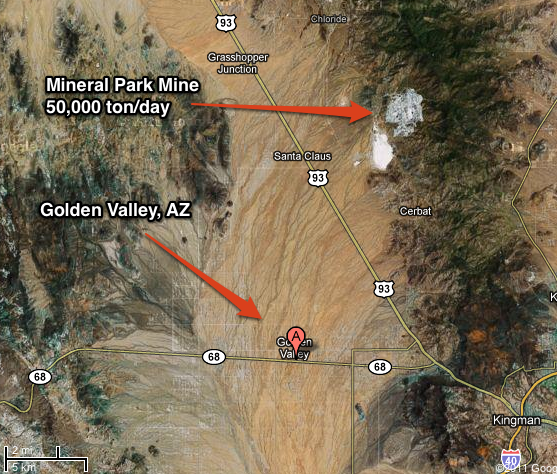
At least in this case I guess there is the potential for some people to be in a pollution plume while others are not if there's a powerplant close by - but of course I don't have that info.
Gianluca Zanna, of MohaveCountyConstitution.com who himself tested positive for high levels of barium, put together the tests which were taken by 17 different people.
A total of 13 people have tested at high levels with most testing at least 1,000 percent over the normal level.
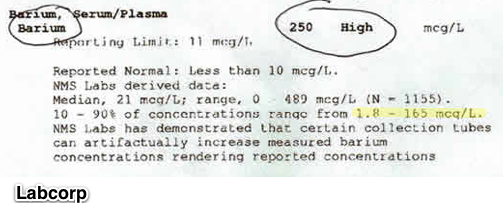
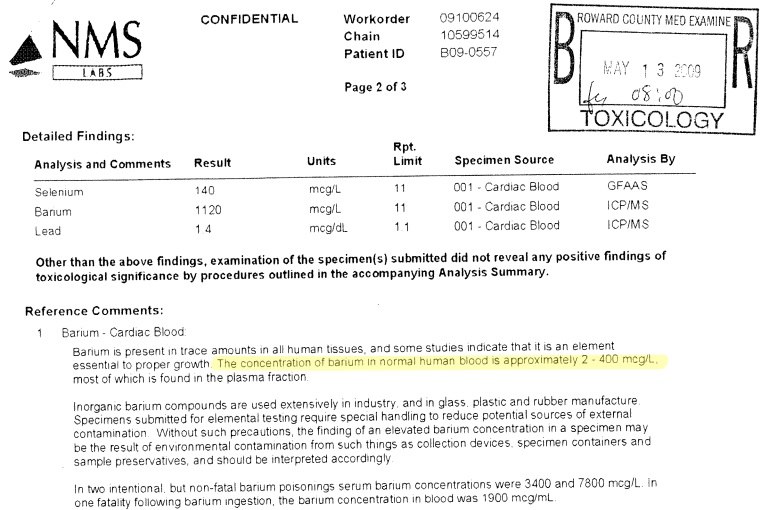
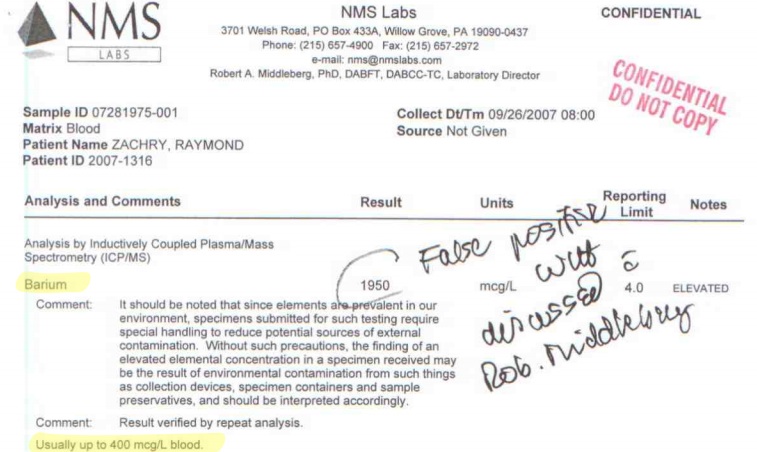
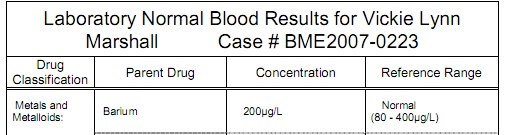
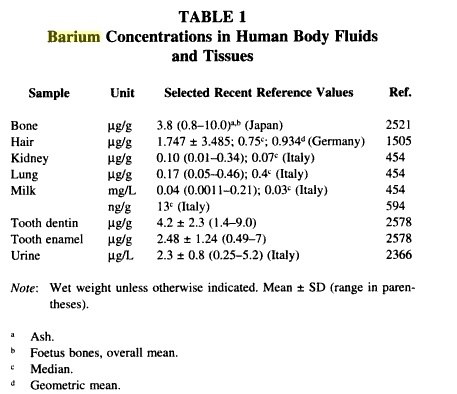
Normal levels are between 2 and 10 mcg/L for barium according to Labcorp and Quest Labs.
1 Alan Golden Valley Barium 150
2 Bridget L. Golden Valley Barium 190
3 Luca Zanna Golden Valley Barium 130
4 Patty Kingman Barium 160
5 Patty's sister in Texas Barium 140
6 Nancy Golden Valley Barium 250!!!!
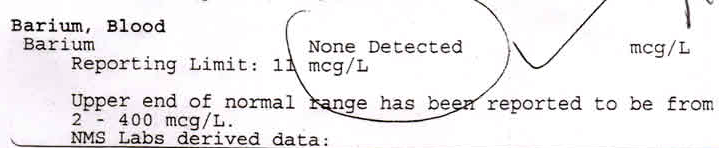
7 Mike B. Kingman No Barium but Aluminum 21 (max is 7)
8 Kenny Golden Valley Barium 190
9 Janna Golden Valley Barium 150
10 Bridget C. Phoenix Barium 140
11 Mike C. Phoenix Barium 130 Aluminum 11 (max is 7)
12 Bridget L. Bullhead City No Barium but Uranium Extremely elevated
13 Ilenia Golden Valley Barium 70
14 Chuck Golden Valley no Barium but elevated Aluminum levels
15 Connie Golden Valley No barium
16 Maggie Kingman No Barium
17 Jim Golden Valley No barium
"None of them works in an at-risk industrial environment, and most spend their time indoors," said Zanna, who, along with his wife and another area resident, tested positive for toxic levels of barium earlier this year.
- http://theintelhub.com/2011/05/17/t...d-in-several-mohave-county-arizona-residents/
I'm sure there's more to it than chemtrails - after all if this stuff is in the air then how come some people have none at all??
Anothe chap has an alternative explaination - big business promoting chemtrails to cover the effects of coal pollution
Which also seems unlikely for exactly the same reason - if it is in the air from polution then how come some people have none in their blood at all??
At least in this case I guess there is the potential for some people to be in a pollution plume while others are not if there's a powerplant close by - but of course I don't have that info.