James S. Woods et al., Modification of neurobehavioral effects of mercury by a genetic polymorphism of coproporphyrinogen oxidase in children. Neurotoxicology and Teratology 34 (2012) 513–521
James S. Woods, Nicholas J. Heyer, Diana Echeverria, Joan E. Russo, Michael D. Martin, Mario F. Bernardo, Henrique S. Luis, Lurdes Vaz, Federico M. Farin, CPOX4 modifies mercury neurotoxicity in children Modification of neurobehavioral effects of mercury by a genetic polymorphism of coproporphyrinogen oxidase in children, Neurotoxicology and Teratology (2012)
Abstract
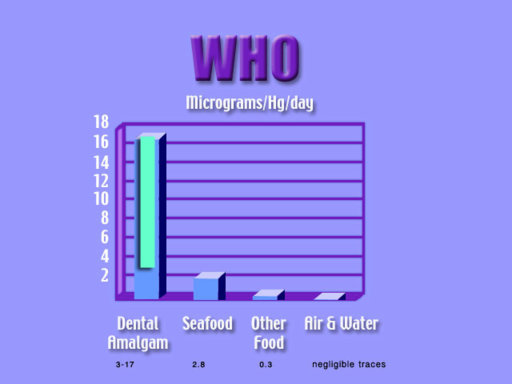
Mercury (Hg) is neurotoxic, and children may be particularly susceptible to this effect. A current major challenge is the identification of children who may be uniquely susceptible to Hg toxicity because of genetic disposition. We examined the hypothesis that CPOX4, a genetic variant of the heme pathway enzyme coproporphyrinogen oxidase (CPOX) that affects susceptibility to mercury toxicity in adults, also modifies the neurotoxic effects of Hg in children. Five hundred seven children, 8-12 years of age at baseline, participated in a clinical trial to evaluate the neurobehavioral effects of Hg from dental amalgam tooth fillings in children.
Subjects were evaluated at baseline and at 7 subsequent annual intervals for neurobehavioral performance and urinary mercury levels. Following the completion of the clinical trial, genotyping assays for CPOX4 allelic status were performed on biological samples provided by 330 of the trial participants. Regression modeling strategies were employed to evaluate associations between CPOX4 status, Hg exposure, and neurobehavioral test outcomes.
Among girls, few significant CPOX4-Hg interactions or independent main effects for Hg or CPOX4 were observed. In contrast, among boys, numerous significant interaction effects between CPOX4 and Hg were observed spanning all 5 domains of neurobehavioral performance. All underlying dose-response associations between Hg exposure and test performance were restricted to boys with the CPOX4 variant, and all of these associations were in the expected direction where increased exposure to Hg decreased performance. These findings are the first to demonstrate genetic susceptibility to the adverse neurobehavioral effects of Hg exposure in children.
The paucity of responses among same-age girls with comparable Hg exposure provides evidence of sexual dimorphism in genetic susceptibility to the adverse neurobehavioral effects of Hg in children and adolescents.
Introduction
Children are recognized as having heightened susceptibility to the adverse effects of environmental chemicals, as compared with adults with similar exposures (Faustman et al. 2000; Landrigan and Goldman 2011). Of particular concern in this respect are possible neurological deficits associated with mercury exposure (Clarkson 2003; Echeverria et al. 1998; Goering et al. 1992), which may cause impairment of the developing central nervous system along with attendant personality, cognitive function and behavioral disorders (Counter and Buchanan 2004; Davidson et al. 2004; Levy et al. 2004). A current major challenge is the identification of those children who may be uniquely susceptible to Hg-mediated neurological deficits because of genetic predisposition.
Previous studies in adults have identified at least 4 commonly expressed genetic polymorphisms that modify the effects of Hg on a wide range of neurobehavioral functions (Echeverria et al. 2005, 2006, 2010; Heyer et al. 2004, 2008, 2009). Of particular interest in this respect is a single nucleotide polymorphism (A>C) (rs1131857) in exon 4 of the gene encoding an asparagine-to-histidine change at amino acid 272 (N272H) of the heme biosynthetic pathway enzyme, coproporphyrinogen oxidase (CPOX, EC 1.3.3.3). This variant, referred to herein as "CPOX4", both increases sensitivity to the neurobehavioral effects of Hg (Echeverria et al.
2006) and modifies urinary porphyrin excretion as a potential biomarker of this effect (Woods et al. 2005; Li and Woods 2009). The population frequencies of the homozygous wildtype (A/A), heterozygous (A/C) and homozygous mutant (C/C) genotypes within this cohort were 0.72, 0.25, and 0.03, respectively, and were equally prevalent among males and females, suggesting substantial exposure to the CPOX4 variant.
In the present study, we examined the hypothesis that CPOX4 would modify the adverse neurobehavioral effects of Hg exposure in children as previously observed in adults.
Subjects were children and adolescents who participated in a recently completed prospective randomized dental amalgam clinical trial between ages 8-18 and for whom longitudinal (annual) neurobehavioral assessments and quantitative measures of dental amalgam Hg exposure over 7 years of follow-up were available. Additionally, to preclude selection bias possibly associated with those genotyped for CPOX4 per se, we made comparable assessments with respect to second single nucleotide polymorphism located at exon 5 (rs1729995) (G>A) of the CPOX gene encoding a synonymous mutation in the CPOX enzyme (E330E), referred to herein as "CPOX5".
CPOX5 has been previously identified as distributed among men and women within our adult dental population with frequencies of the homozygous common (wildtype), heterozygous, and homozygous mutant alleles of 0.48, 0.43 and 0.09, respectively (Woods et al., 2005). CPOX5 is not known to be in linkage disequilibrium with CPOX4. We made these assessments independently in boys and girls.
Discussion
Numerous studies have proposed a component of genetic susceptibility to neurobehavioral disorders associated with mercury and other xenobiotic exposures (Braun et al. 2006; Gundacker et al. 2010; Engström et al. 2008; Suk and Collman 1998), although the modifying effects of commonly expressed genetic variants on these associations are just beginning to be defined. This is the first study, to our knowledge, to describe a genetic polymorphism that modifies the effects of mercury exposure on a wide variety of neurobehavioral functions in children.
Previous studies provided evidence of significant associations between Hg exposure and the CPOX4 variant on neurobehavioral functions in adult dental professionals (Echeverria et al. 2006), although observed joint effects in that study were found to be strictly additive in nature. The present findings of synergistic, i.e., more than additive, interactions between Hg and CPOX4 on numerous neurobehavioral functions are consistent with potentially heightened susceptibility of children to the adverse neurobehavioral effects of Hg specifically associated with the CPOX4 genetic variant.
The paucity of findings of independent effects of Hg exposure on tests of neurobehavioral function in this study provide some consistency with findings from the dental amalgam clinical trial (DeRouen et al. 2006), in which exposure to Hg from dental amalgam was found not to be associated with deficits in any tests of neurobehavioral performance among either boys or girls.
However, when controlling for CPOX gene status as performed here, Hg exposure was strongly associated with diminished performance across a wide range of the same tests, among boys with the CPOX4 variant.
Diminished performance was most predominantly observed in tests of Attention, suggesting possible impairment of attentional vitality and flexibility, e.g., ability to sustain attention or to shift between 2 sequences held in working memory (Echeverria et al., 2002). Significant interactions between Hg exposure and CPOX4 on tests of Learning & Memory and of Visual-Spatial acuity were also observed, suggesting possible decrements of verbal learning and memory as well as of perceptual cognition. Effects on tests of Motor function, including measures of manual coordination and fine motor speed, also appear to be adversely affected when evaluated within the context of chronic Hg exposure among boys with the CPOX4 variant.
These findings have important public health implications, inasmuch as mean urinary mercury levels among boys in this study ranged from 1.4 (1.3-1.6) mg/g creatinine at baseline to a maximum of 2.2 (1.8-2.5) mg/g creatinine at Year 2 of follow-up in the dental amalgam clinical trial. By comparison, geometric mean urinary mercury levels measured among a nationally representative sample of children 12-19 years of age acquired as part of the 2003-2004 U.S. National Health and Nutrition Examination Survey (Centers for Disease Control and Prevention 2007) were 0.358 (0.313-0.408) mg/g creatinine. Although this value is substantially lower than those measured in the present study, the mean urinary Hg concentration in the 90th percentile of that sample was 1.59 (1.13-2.52) mg/g creatinine, comparable to the range of Hg concentrations at which adverse neurologic effects of Hg were observed herein among boys with CPOX4.
These observations suggest potential adverse neurobehavioral effects of Hg among boys with the CPOX4 variant who fall within the top 10% of subjects sampled within that survey for Hg exposure.
The mechanistic association of CPOX4 to neurobehavioral functions remains to be delineated, although potential alterations in physiological heme availability and/or hemedependent processes associated with diminished CPOX4 activity may underlie this effect (Li and Woods, 2009). In this regard, heme is known to play a critical role as a signaling molecule in glutaminergic neuronal receptor processing and synapse development (Chernova et al. 2006; Sengupta et al. 2005), as well as in the regulation of serotonin (5-hydroxytryptamine) synthesis and signaling in the central nervous system (Litman and Correia 1983, 1985). Disorders of both systems have been implicated as etiologic in a variety of neurodevelopmental and neurobehavioral disorders (Chernova et al. 2011; Chugani et al. 1999; Smith et al. 2012), and both could be amenable to disruption by heme deficiency during critical periods of neurological development in children, particularly in association with mercury exposure (Li and Woods 2009). While these observations provide a scientific rationale for the diminished neurobehavioral performance observed here among boys with the CPOX4 variant and Hg exposure, further studies are required to define the specific mechanistic events underlying this association. The absence of effects of CPOX5 on neurobehavioral functions when evaluated in relation to any measure of Hg0 exposure in this study suggests that the CPOX4 variant may act in a genotype-selective manner to mediate the adverse neurobehavioral effects of Hg exposure observed here.
While the potential effects of CPOX5 on CPOX enzymatic activity, heme bioavailability, or processes affecting neurological function are not known, CPOX5 need not be viewed as incapable of affecting biological processes, inasmuch as synonymous SNPs are widely recognized as mediating changes in translation kinetics, protein folding and other factors that underlie a wide variety of neurological and other disorders in humans (Chamary et al. 2006; Duan et al. 2003; Komar 2007). Moreover, the heterozygous and full mutant variants of CPOX5 were distributed quite differentially from those of CPOX4 within this cohort, only 7 subjects (2%) sharing both CPOX4 and CPOX5 variant status, militating against selection bias in terms of findings observed with respect to those with CPOX4. Further research analyzing multiple SNPs within the CPOX gene as well as others associated with heme- ependent neurotransmitter processing pathways is required to identify the mechanisms underlying the apparent selective effects of CPOX4 seen here.
Notable differences between boys and girls in the effects of Hg exposure and the CPOX4 variant on neurobehavioral test performance were observed in this study. Although Hg exposure from dental amalgam was comparable among boys and girls participating in the clinical trial (DeRouen et al, 2006), sex-related differences in Hg toxicokinetics that may afford greater Hg excretion and, consequently, lesser likelihood of Hg retention and accumulation in girls than boys may contribute to this effect (Woods et al. 2007). Numerous other factors that include genetic and hormonal differences affecting brain development, structure and function between boys and girls are also likely to contribute to the gender differences observed here (Gochfield 2007; Hines et al. 2010; Vahter et al. 2007a,b; Valentino et al. 2012). Differences in detection sensitivity for CPOX4 between boys and girls in this study have a less clear explanation, although genetic factors underlying gender differences in numerous psychiatric and neurobehavioral disorders have been reported (Baca-Garcia et al. 2002; Gaub and Carlson 1997; Harrison and Tunbridge 2008; Samochowiec et al. 2004).
The observation that neither Hg exposure nor CPOX4 alone substantially affected neurobehavioral performance in girls suggests that sex-related predisposition, in addition to differences in Hg toxicokinetics, affects susceptibility.
Of note, measures of cognitive function and other behaviors not specifically related to reproduction are often sex- inked, accounting for substantial differences in response to many chemical agents, with subsequent expression in behavior (Weiss 2002). In this respect, many classes of chemicals including dioxins and polychlorinated biphenyls (Weiss 2002), metals (nickel arsenic, lead, cadmium, mercury) (Vahter et al. 2007a,b), pesticides (paraquat, dithiocarbamate, triazole fungicides) (Vahter et al. 2007a), cigarette smoke (Kelada et al 2002); and various classes of drugs (Calabrese 1985) are reported to differentially affect neurologic functions in males and females, both in humans and animal models (Vahter et al. 2007a; Bjorklund et al., 2007; Gochfeld 2007). The sexually divergent responses to Hg exposure and genetic disposition observed in the present study highlight the importance of considering such differences in development of strategies aimed at risk assessment and prevention, especially in children.
Conclusion
the present studies demonstrate significant adverse effects on neurobehavioral functions associated with chronic Hg exposure and the CPOX4 genetic variant among children, with effects manifested predominantly among boys. These findings are the first to describe a genetic polymorphism that modifies the effects of Hg exposure on neurobehavioral functions in children, and suggest directions for future research to define mechanisms underlying differential sensitivity to mercury between boys and girls.